When You Cannot Select a Wash Cycle
Your washing machine’s cycle selector is the primary interface between you and the machine’s cleaning capabilities. Whether it is a traditional rotary knob or a modern digital control panel, the cycle selector tells your washer what temperature to use, how long to agitate, how fast to spin, and when to rinse. When this component fails, you may find yourself unable to start any cycle at all.
For Winnipeg homeowners dealing with a non-functioning cycle selector, understanding the problem and knowing your repair options can save you from unnecessary frustration and expense.
Types of Cycle Selectors
Mechanical Rotary Selectors
Found on traditional and many mid-range washing machines, mechanical selectors use a rotary switch connected to a timer assembly. Turning the knob physically rotates a cam that engages different electrical contacts corresponding to different wash cycles.
Common failure modes:
- Contact points wear down from years of use
- Internal cam mechanism breaks
- Knob shaft strips or cracks
- Timer motor burns out
Electronic Push-Button Selectors
Modern washing machines often use electronic controls where cycle selection is done through buttons or a touchscreen. These send digital signals to the main control board.
Common failure modes:
- Button contacts deteriorate
- Membrane switches lose responsiveness
- Control board fails to process inputs
- Ribbon cable connections loosen
Digital Touch Controls
Higher-end machines use capacitive touch panels similar to smartphone screens. These are sleek but have their own vulnerabilities.
Common failure modes:
- Moisture damage to the touch panel
- Control board communication failures
- Display malfunction
- Sensitivity calibration drift
Common Causes of Cycle Selector Failure
1. Worn Switch Contacts
In mechanical selectors, each cycle position corresponds to a set of electrical contacts inside the switch. After thousands of rotations, these contacts wear thin, corrode, or lose their spring tension, resulting in intermittent or complete failure.
2. Broken Timer Assembly
The timer assembly in older washers is a complex mechanical and electrical device that controls the progression of the wash cycle. When the timer motor fails or internal gears strip, the selector may turn but the machine will not respond.
3. Faulty Control Board
In electronic machines, the control board interprets button presses and executes the selected cycle. A damaged or malfunctioning board can:
- Ignore button inputs entirely
- Respond to some buttons but not others
- Execute the wrong cycle
- Display error codes related to input failure
4. Loose or Damaged Wiring
Vibration from spin cycles can loosen wire connections between the selector switch and the control board over time. Winnipeg homes with older washing machines are particularly susceptible, especially if the machine has been moved or serviced previously.
5. Physical Knob Damage
The selector knob itself can break, crack, or strip on its shaft. While this seems minor, a damaged knob cannot properly engage the switch mechanism beneath it, making cycle selection impossible.
Troubleshooting Steps for Winnipeg Homeowners
Step 1: Perform a Power Reset
Unplug the washing machine for five minutes and plug it back in. This resets the control board and can resolve temporary electronic glitches.
Step 2: Test All Cycle Positions
Try selecting every available cycle to determine if the problem affects all positions or only specific ones. Partial failure points to worn contacts in a mechanical switch, while total failure suggests a deeper electrical issue.
Step 3: Inspect the Knob
Remove the selector knob (most pull straight off) and inspect the shaft for damage. Check that the D-shaped shaft or flat spot engages properly with the switch underneath. Replace the knob if it is cracked or stripped.
Step 4: Listen for Clicks
When turning a mechanical selector, you should hear and feel distinct clicks at each position. If the knob turns smoothly without clicks, the detent mechanism inside the switch is likely broken.
Step 5: Check for Error Codes
Electronic machines may display diagnostic codes when the control board detects an input problem. Record any codes and reference your owner’s manual for specific meanings.
Step 6: Inspect Wiring Connections
If you are comfortable opening the machine’s control panel (always unplug first), visually inspect the wiring harness connected to the selector switch. Look for loose connectors, burnt wires, or corrosion.
Professional Repair Options in Winnipeg
A Winnipeg washing machine repair technician can provide:
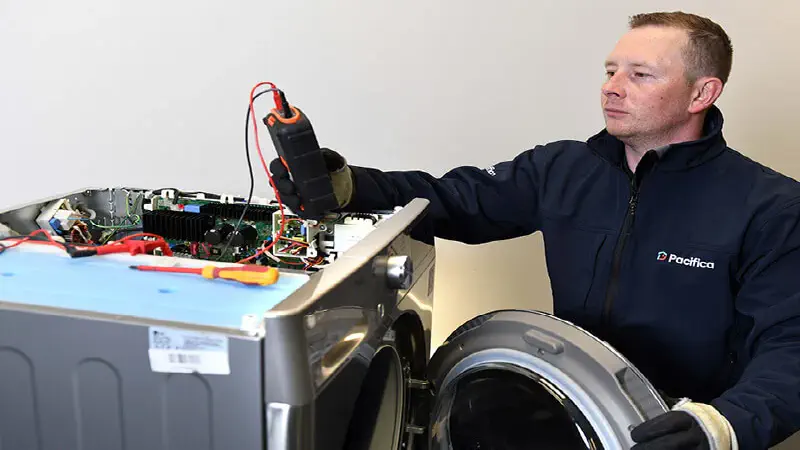
- Comprehensive diagnostics using multimeters and diagnostic modes
- Selector switch replacement with OEM or compatible parts
- Timer assembly rebuilding or replacement for mechanical machines
- Control board repair or replacement for electronic models
- Wiring repair and connector replacement
- Calibration of electronic controls after repair
Professional repair ensures correct diagnosis and proper part selection, avoiding the trial-and-error approach that can waste time and money.
Preventing Cycle Selector Problems
- Turn the knob gently rather than forcing it past detent positions
- Use a surge protector to protect electronic controls from Winnipeg power fluctuations
- Keep the control panel dry to prevent moisture damage to electronics
- Avoid pressing buttons with excessive force on electronic models
- Schedule annual maintenance to catch worn components before they fail completely
Restore Full Control of Your Washing Machine
A broken cycle selector leaves you unable to wash your clothes the way you need to. Whether the issue is a worn mechanical switch or a faulty electronic control board, the problem will not fix itself and will likely worsen over time.
If your washing machine cycle selector is not working, contact a professional washing machine repair service in Winnipeg today. Our experienced technicians can diagnose the issue, source the right parts, and restore full functionality to your washer quickly and affordably.